
kiutra at APS
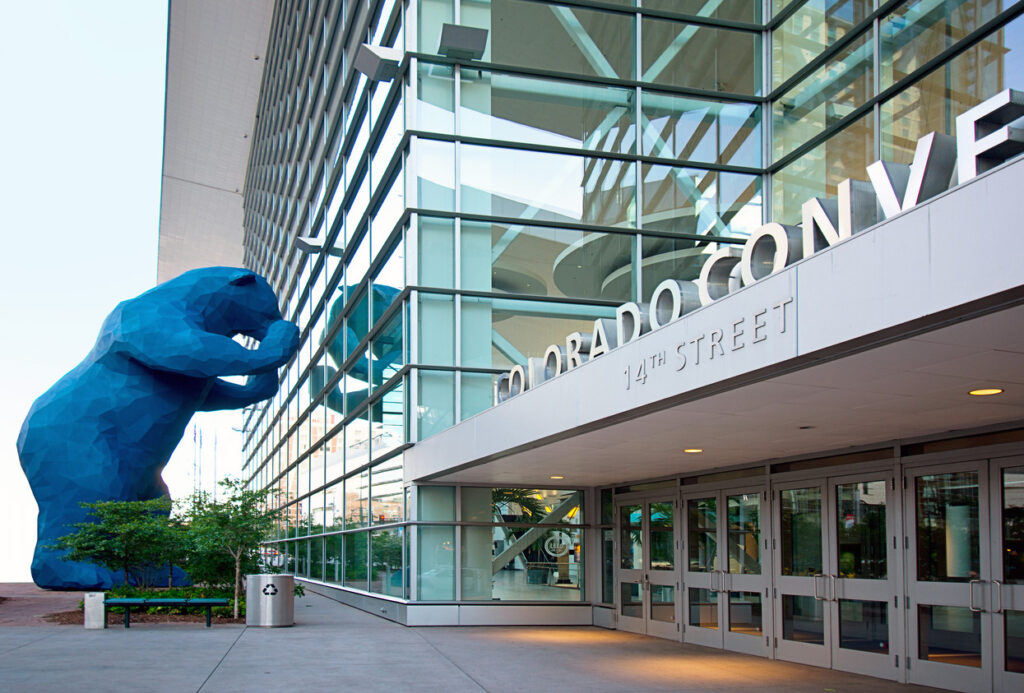
We will be exhibiting at the APS Global Physics Summit 2026 from March 16–20 in Denver
Visit us at Booth 807 to see how we simplify quantum cooling in practice:
- Fast, easy access to kelvin and millikelvin temperatures – systems, services or rental
- Scalable cooling for quantum technologies
- Helium-3-free
Cooling that grows with your work.
From first experiments to scaled-up quantum systems.
Scientific presentations
Wednesday, March 18
Meeting Room 106
9:00–9:12 a.m.
Presenter: Steffen Säubert
Modeling and scaling of ADR systems for next-generation millikelvin cooling for quantum computers
Quantum technologies, in particularly superconducting quantum computing, demand robust and scalable cooling solutions operating deep in the millikelvin regime. Adiabatic Demagnetization Refrigeration (ADR) offers a helium-3-free alternative with strong potential for modular scaling. Building on our previous demonstration of continuous ADR (cADR) operation below 30 mK in a compact rack-mounted system, the LEMON project advances the technology toward a larger-scale ADR platform targeting 20 µW at 20 mK – an order of magnitude improvement over the ~3 µW at 50 mK achieved in earlier systems. Achieving this performance requires a fundamental redesign of ADR components and a detailed understanding of their coupled behaviour. To this end, we have developed a comprehensive modeling framework that captures the full cADR cooling cycle, including refrigerants, mechanical and superconducting heat switches, and thermal interfaces between all components. The theoretical model has been experimentally validated using a dedicated cryogenic test platform providing the millikelvin environment and enabling systematic characterization of materials and prototype components. The combined simulation and experimental results provide new insight into materials properties, interface conductance, and switching dynamics, guiding the optimization of next-generation ADR systems. These advances establish a predictive and scalable foundation for magnetic refrigeration
Thursday, March 19
Meeting Room 404
8:12–8:24 a.m.
Presenter: Pau Jorba
A millikelvin heat capacity measurement setup for quantum materials characterization
Accurate heat capacity measurements are essential for understanding the fundamental properties of quantum materials, especially at extremely low temperatures and in high magnetic fields, where novel quantum phenomena emerge. We present a cutting-edge heat capacity measurement setup designed for precise operation at millikelvin temperatures and under high magnetic fields in a fast characterisation cryostat, enabling the study of a wide range of quantum materials. The presented setup enables quick sample analysis and facilitates high-throughput studies. To illustrate the effectiveness of this system, we will present data from commonly known materials exhibiting quantum behaviour, demonstrating the system’s capability to resolve critical features at low temperatures and in applied magnetic fields. We further demonstrate customisability of the setup to account for various sample heat capacities and temperature ranges and showcase the reliability of the obtained results using a python-based data analysis software and different fitting routines for the short pulse method.
Mile High Ballroom 2A/3A
10:24–11:00 a.m.
Presenter: Jan Spallek
Millikelvin magnetic refrigerators: from rapid-exchange laboratory platforms to to high-power cryogenic infrastructure
Access to millikelvin temperatures is essential for quantum technologies and low-temperature physics. Today, most millikelvin systems rely on helium-3–based dilution refrigeration, creating scalability challenges and motivating alternative approaches to ultra-low-temperature cooling.
We present recent progress in adiabatic demagnetization refrigeration (ADR). We describe the implementation of continuous ADR (CADR) in a compact, truly cryogen-free platform designed to enable rapid device and sample characterization at millikelvin temperatures. We then discuss key component developments toward scalable CADR architectures and outline a modular cooling approach aimed at supporting large-scale quantum systems.
Together, these developments illustrate how magnetic refrigeration can make millikelvin temperatures more accessible and provide a path toward modular cryogenic architectures for next-generation quantum technologies.
Mile High Ballroom 4C
1:00–1:12 p.m.
Presenter: Sabrina Kressierer
Accelerating cryogenic characterization of superconducting quantum devices with a fast turnaround cryostat
The rapid growth of quantum technologies demands fast and reliable characterization methods for materials and devices at sub-Kelvin temperatures. However, development cycles are slowed by long turnaround times of conventional cryostats, and the lack of integrated measurement capabilities. We present a fast-turnaround cryostat developed for the characterization of quantum devices, based on continuous magnetic cooling. A sample loader mechanism enables automatic cooling of quantum devices from room temperature to below 50 mK in less than four hours, and warm up in 30 minutes. The cryostat can be equipped with ready-to-use measurement options, eliminating the need for custom experimental setups. As an example, we showcase the measurement of a superconducting thin film using our resistance measurement option, demonstrating outstanding temperature resolution and accuracy. Additionally, we study the temperature dependence of the internal quality factor of a superconducting resonator in a completely automated way, enabling easy access to TLS related losses. Our results underline how rapid, accessible characterization at millikelvin temperatures helps overcome the growing bottleneck in quantum materials and device development.
Mile High Ballroom 4C
1:36–1:48 p.m.
Presenter: Felix Rucker
Rapid characterization of Josephson Junction devices using an L-Type Rapid fast turnaround cryostat
We present a rapid measurement approach for Josephson junction (JJ) devices aimed at accelerating the feedback loop in the fabrication and optimization of superconducting circuits, particularly qubits. Using a kiutra L-Type Rapid cryostat equipped with an automated switching system, we achieve turn-key characterization of JJs within four hours, including cool-down, measurement, and warm-up cycles. This setup enables precise determination of critical current, normal-state resistance, and switching dynamics across a broad temperature range, while significantly reducing turnaround time compared to conventional dilution refrigerator systems. The approach supports high-throughput testing of large JJ batches, improving the efficiency of parameter optimization and fabrication yield in superconducting device development. By combining automation with a compact cryogenic platform, this method offers a scalable solution for rapid prototyping and quality control in next-generation quantum computing architectures.
Mile High Ballroom 4C
2:24–2:36 p.m.
Presenter: Noelia Fernandez
Evaluating shielding strategies for improved qubit coherence using a rapid characterization cryostat
The performance of superconducting qubits is critically limited by decoherence processes influenced by magnetic and electromagnetic noise. We investigate the influence of different shielding configurations on the decoherence times of superconducting qubits within a fast-turnaround characterization cryostat.
Our study explores single- and double-layer shielding prototypes with various materials and surface coatings, systematically analyzing their combined effects on qubit relaxation and dephasing times. By characterizing qubit performance under controlled shielding scenarios, we aim to identify optimized designs that mitigate magnetic flux noise and improve environmental stability. This approach provides valuable insights into the design of compact, high-performance cryogenic environments for rapid and reliable quantum device testing, contributing to the broader goal of scalable, high-throughput qubit characterization for next-generation quantum technologies.
Resonance III

We are also co-hosting the Resonance III an exclusive, invite-only community gathering hosted by 28 leading quantum-tech organizations for peers attending the APS Global Physics Summit 2026.
An evening dedicated to connection, conversation and a lot of fun with the people behind the science. Informal and pitch-free.
Wednesday, 18 March 2026
Doors open: 18:00
To join Resonance III, please get in touch with us via our contact form.
We look forward to seeing you in Denver!