
Life Cycle Assessment Guide
Concepts and guidance for early stage products
Sustainability is now a design requirement, not an afterthought, and Life Cycle Assessment (LCA) is one of the standard tools for understanding a product’s environmental footprint. Most LCA guidance assumes established systems with reliable datasets. This guide addresses the earlier stage, where processes are still fluid and data is scarce, walking through how early-stage teams can begin an LCA before that data exists.
Each concept is paired with a running case study – the life cycle assessment of an incandescent light bulb – so the methodology is shown in practice, not just explained in theory.
A companion 50-question knowledge check runs alongside the chapters, with immediate feedback on each answer. It’s optional, untimed, and can be worked through chapter by chapter or all at once.
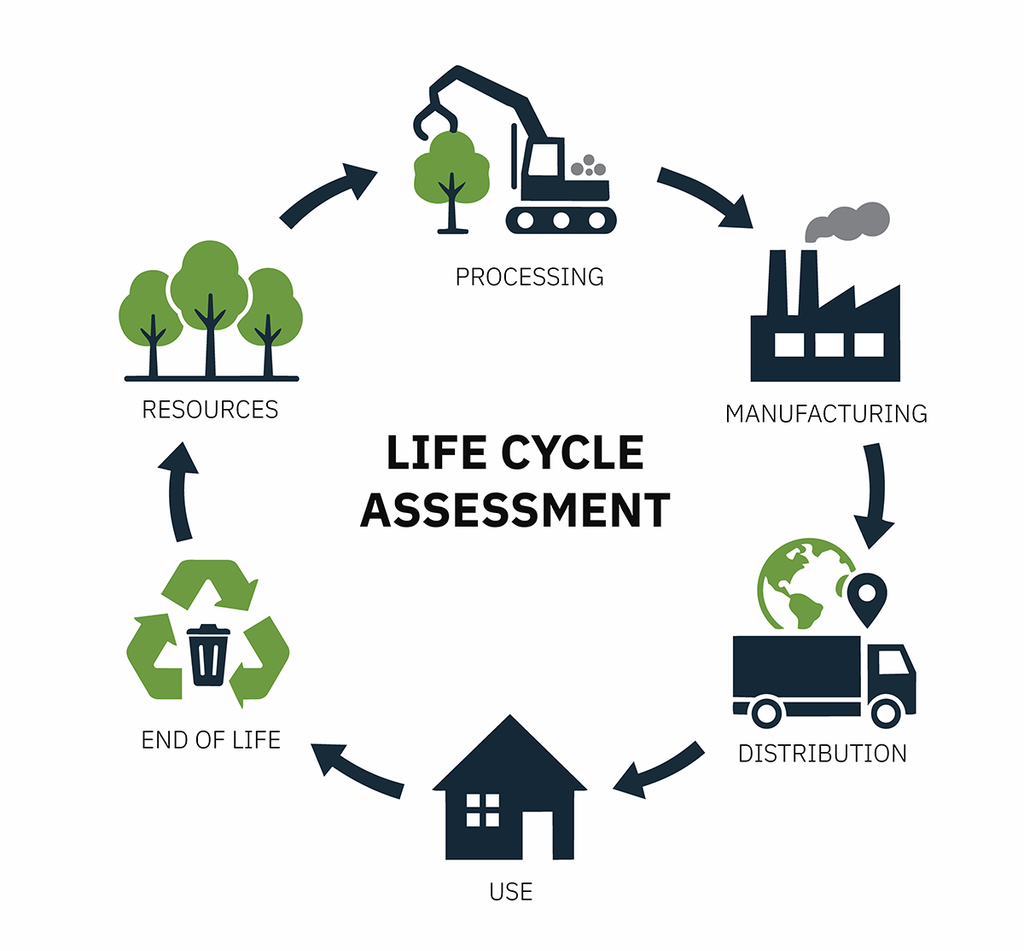
What the guide covers
- What Life Cycle Assessment is, and why it matters early in product development
- How to design an LCA and link its scope to Technology Readiness Level (TRL)
- The four phases of an LCA: Goal and Scope, Life Cycle Inventory, Life Cycle Impact Assessment, and Interpretation
- A full worked case study: the life cycle assessment of an incandescent light bulb
- Different types of LCA – attributional, consequential, comparative, social, and cost-based
- LCA software platforms, practical tips, and current EU regulation (ESPR, the Battery Regulation, CSRD, CBAM, and the Digital Product Passport)
58 pages covering the full arc of LCA, from foundational concepts to EU regulatory requirements.