Customer story
Research-grade measurements, student-focused operation
How the Niels Bohr Institute built a first-of-its-kind, hands-on quantum lab with the L-Type Rapid
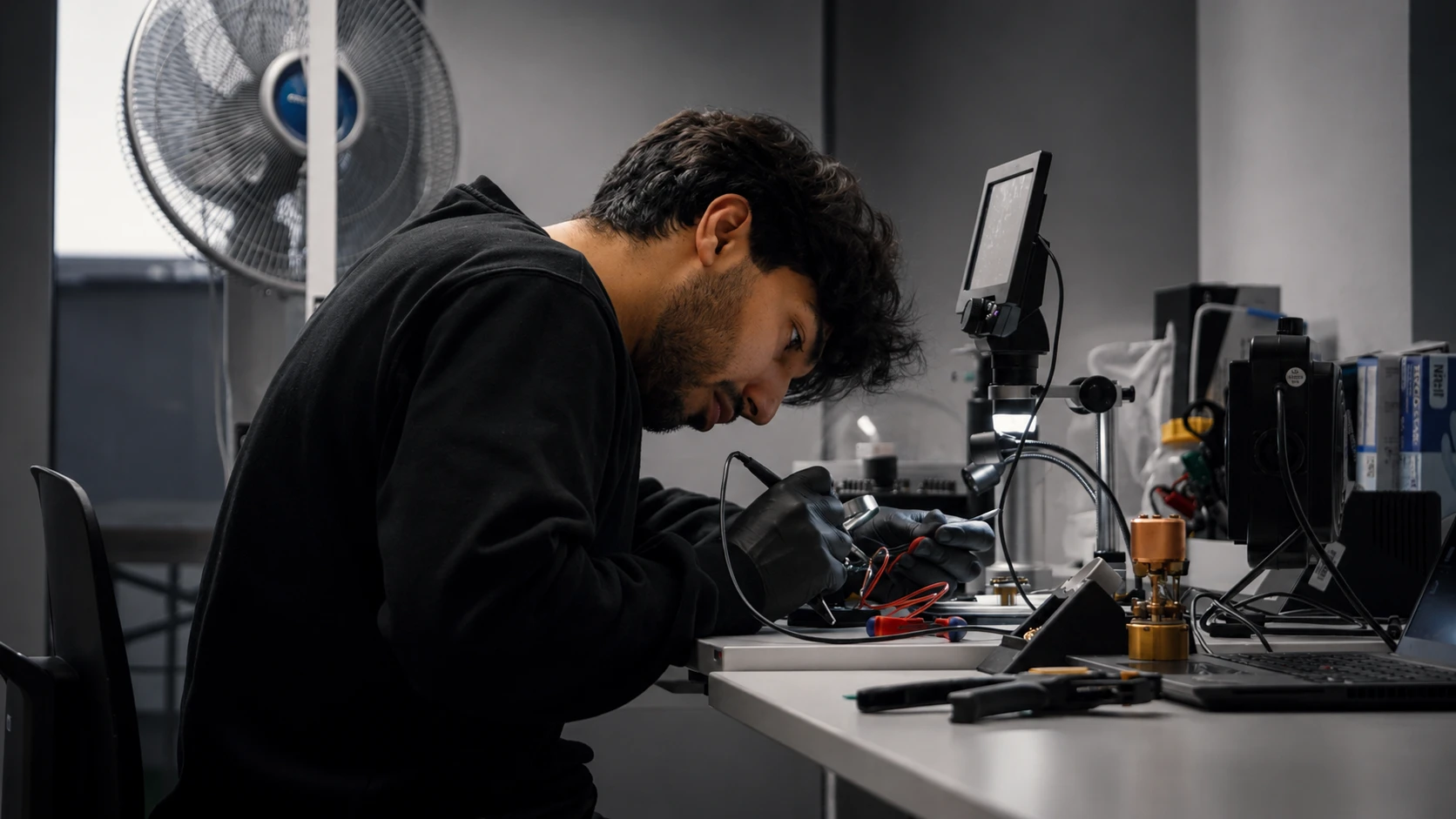
Students can load a sample and have it thermalized in the cold fridge in 5 hours. For teaching, we needed a system with this kind of speed – and it’s something we couldn’t find elsewhere.
Summary
The Quantum Training Lab (QTL) at the Niels Bohr Institute is the first training lab that directly and systematically integrates low-temperature measurements from research-grade equipment into student curriculum and quantum outreach. Prior to this, only PhD and master’s students could run real low temperature quantum experiments.
With the L-Type Rapid, the QTL provides up to two measurement cooldown sessions per day. The combination of fast turnaround and stable thermal and magnetic control gives the QTL a repeatable measurement environment that can move at the speed of curriculum.
Introduction
The QTL is a new training lab supported by the A.P. Møller Foundation and the Novo Nordisk Foundation at the Niels Bohr Institute in Copenhagen, Denmark. It gives students hands-on exposure to low-temperature quantum experimentation, with the goal of modernizing how quantum physics is taught and inspiring more students to pursue it as a career.
How the QTL combines lecture and lab
To encourage lab exposure to all students at the Institute, the QTL integrates lecture and lab directly into an offered course. The course naturally combines experimentation with the lecture, including demonstration, execution, and analysis.
Day 1:
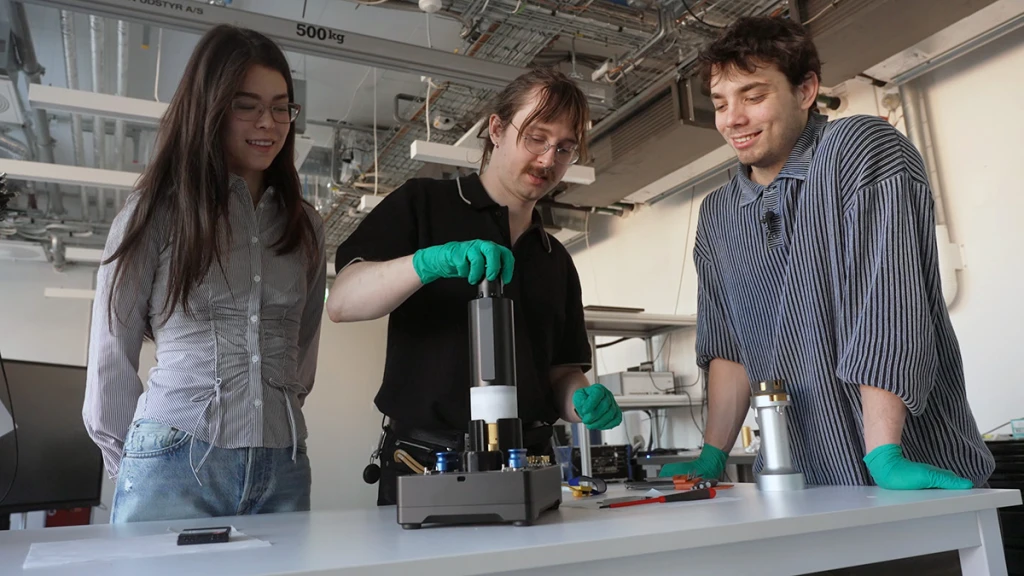
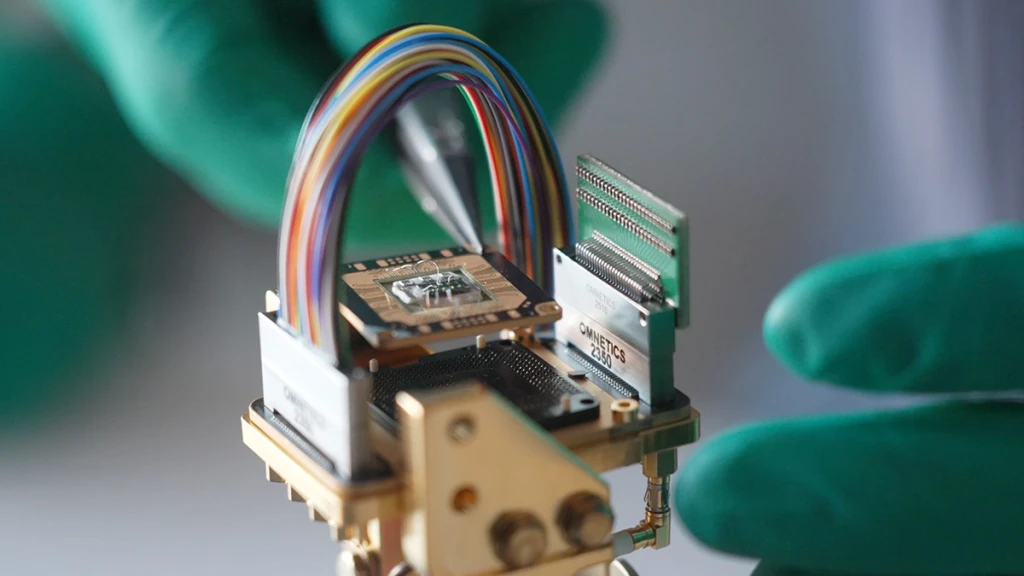
On Monday, the students come to the QTL following the lecture to attend a demonstration presented by the Teaching Assistant (TA) on how to perform the accompanying experiment. The TA shows students the sample and the wiring connections, loads the sample into the cryostat, and begins an example cooldown for students to repeat in their small groups.
Days 2–4:
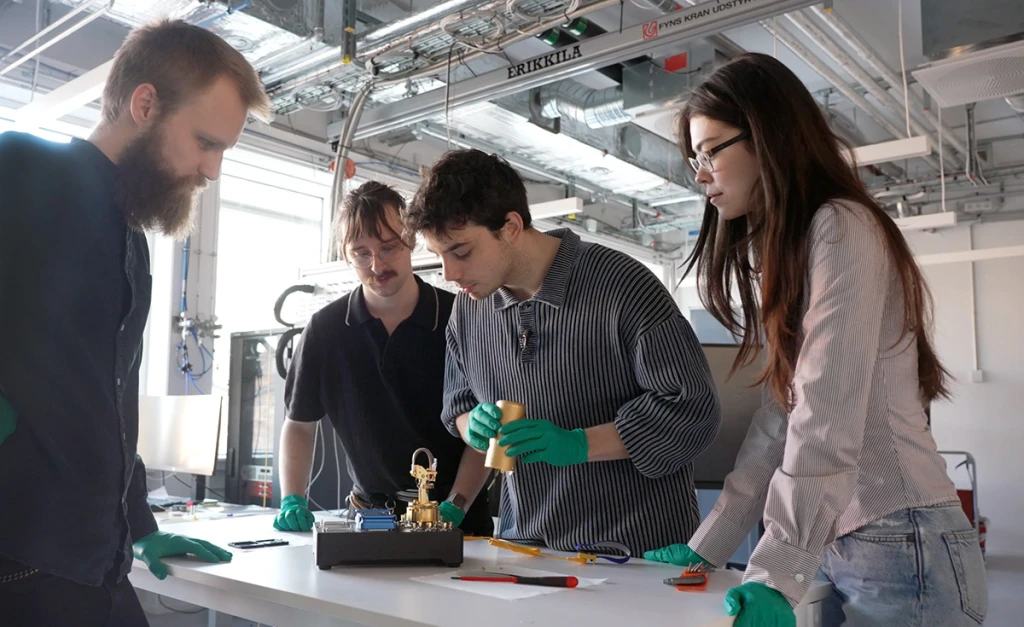
Students return to the lab in small groups to complete the full experimental cycle in a single session on their own cryostat. They initiate cooldown, collect and interpret data, then warm the cryostat and remove the sample before the session concludes. Each day, the lab runs two sessions with multiple students each, until the full class has finished.
Outside of lab:
Students analyze the results they receive from the lab and connect their findings directly to the material learned in lecture.
The course empowers students to take control of their own experiment, becoming more independent in the equipment operation and quantum knowledge as the course progresses. Students most commonly measure material properties under different low-temperature conditions, including superconducting transition temperature of metals and quantum Hall effect. By the end of the course, the students can carry out their own guided experiments without assistance from the teaching staff.
How the L-Type Rapid enhances the QTL
To enable crossover between quantum concepts and practical application, the L-Type Rapid provides what many cryostats cannot: the speed to keep up with quantum lecture. While cooldown time varies depending on temperature needed, the L-Type Rapid can produce initial results for materials characterization at 150 mK within three hours. This enables groups to perform experiments twice a day, allowing each student to interact with the cryostat and analyze results from their own samples.
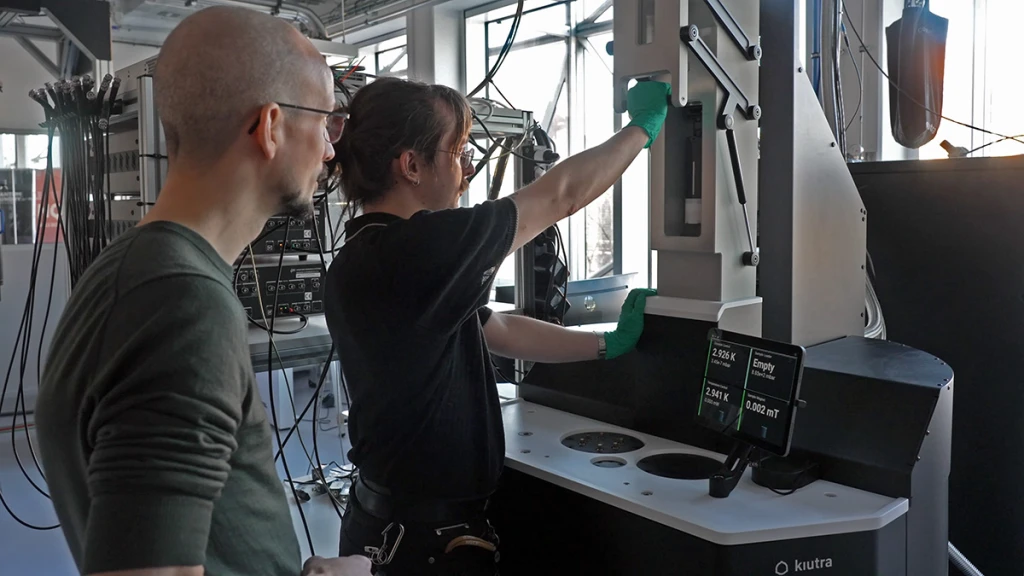
While speed matters to the efficiency of the lab, reliable results require precise measurements from a stable low-temperature environment, which the L-Type Rapid delivers through magnetic cooling. A sample magnet can also be integrated for experiments that require it. Reliable and controlled temperature and magnetic field sweeps produce results that are consistent between theory and experiment, and consistent from student to student. This baseline of results further solidifies the understanding of quantum phenomena and prepares students to interpret results as they would in a professional research environment.
The impact
With the combined course at the QTL, students can better connect the concepts from lecture with hands-on experimentation, making them better prepared to enter research labs and industry. Within its first year, 75 students have benefited from the course, demonstrating the demand for hands-on quantum education earlier in the academic pipeline. This means students encounter research-career preparation as early as their bachelor’s or master’s studies, years before they typically would in a PhD.
We sometimes have educators and researchers visiting the lab saying: ‘I would have loved this when I studied.’ or ‘The first time I saw a fridge at millikelvin temperatures, I was in my second year of PhD.’ With the QTL, students get that experience years earlier.
Quantum outreach
The QTL also uses the L-Type Rapid for outreach, inviting high school students to observe low-temperature experimentation, run their own code, and change measurement parameters to observe the results. The speed of the L-Type Rapid enables this outreach without disrupting other active university experiments, while the stable measurement environment produces consistent, predictable results that reinforce a student’s first encounter with quantum phenomena.
Between the low-temperature and optics labs, over 600 high school students have visited the QTL to witness real experiments firsthand, with the goal of inspiring the next generation to pursue careers in quantum research.
The future
The Niels Bohr Institute plans to expand the curriculum in the QTL with an L-Type focused second course that advances students from foundational measurements into more complex experimental territory, including Type 1 and Type 2 superconductor differentiation and hands-on sample preparation. The goal is to continue building the experimental independence that the first course establishes while challenging students to make inferences about their results.
Conclusion
The Quantum Training Lab at the Niels Bohr Institute gives students hands-on experience by integrating low-temperature quantum experimentation directly into the curriculum.
With the L-Type Rapid, the institute keeps pace with the lecture through fast turnaround, and matches theory with consistent experimental results. The result is a training model and outreach program that gives students access to real quantum experiments years ahead of the traditional timeline.
Learn more about applying fast-turnaround cryostats to an educational setting.
Learn more about how the L-Type Rapid can fit into your curriculum or lab.
About the Niels Bohr Institute
The Niels Bohr Institute was founded in 1921 in Copenhagen for the physician and Nobel prize winner, Niels Bohr. Niels Bohr was known to have created the groundbreaking atom model, which formed our initial understanding of the building blocks of the world, and was later the base for the understanding of quantum mechanics, which has revolutionized the technological development.