
The barriers to scalable quantum systems
As qubit counts increase, cryogenic requirements grow faster than conventional cooling technologies can handle. The increasing demand for cooling power, wiring density, and low-temperature electronics adds complexity to integrated quantum setups and drives repeated design iterations. In addition, today’s dominant cryogenic technology, dilution refrigeration, depends on helium-3 – a scarce resource that creates a major supply risk for long-term scaling.
What works for hundreds or even thousands of qubits now becomes structurally limiting at larger scales. Quantum computing requires more than incremental cooling improvements – it requires architectural change.
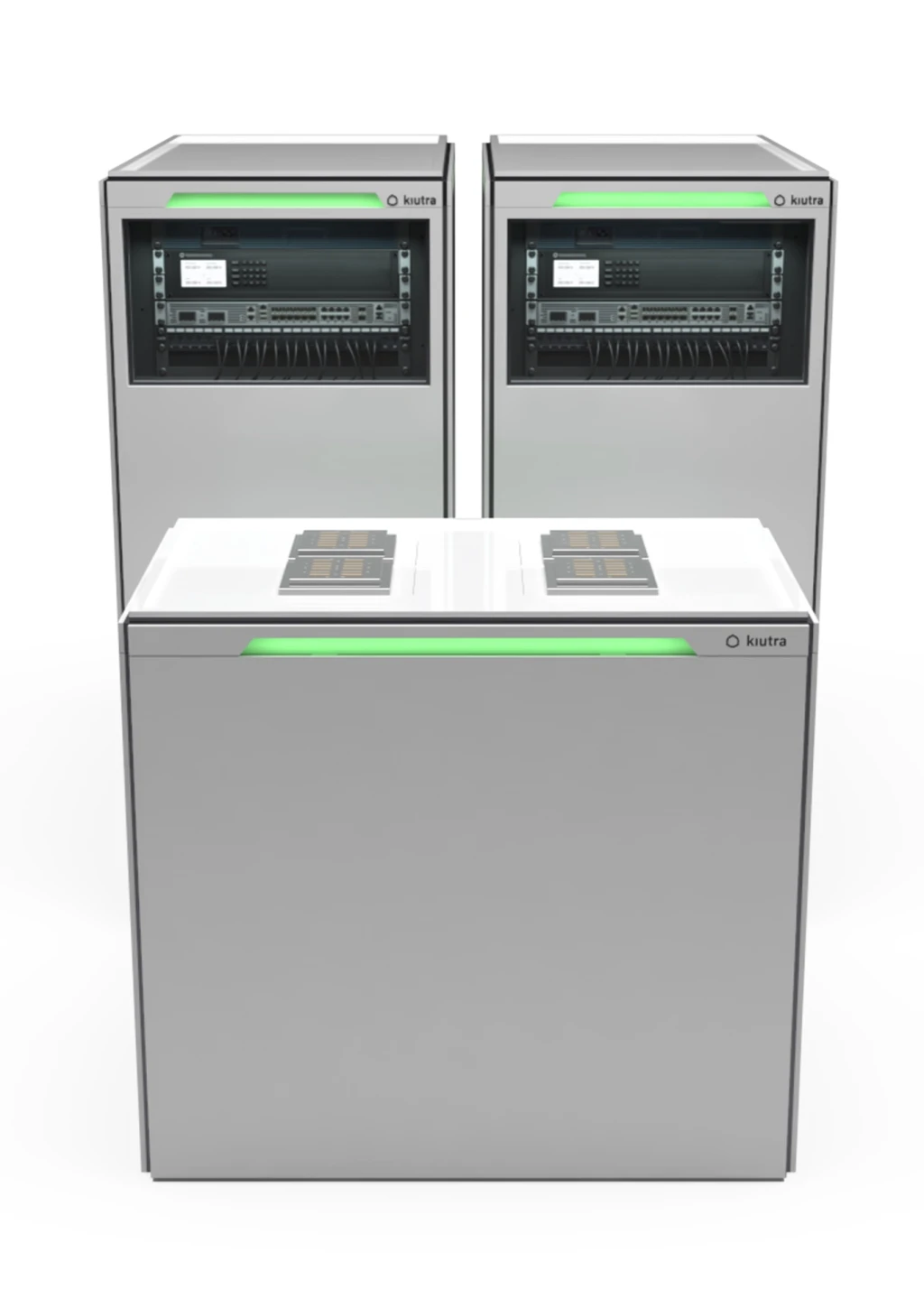
Superconducting qubits
Two cooling modules and one payload module
| Temperature stage | Operating temperature | Cooling power |
|---|---|---|
| 1st CCR | 50 K | 10 W (+35 W **) |
| 2nd CCR | 4 K | 0.8 W (+1 W **) |
| Intermediate T | 300 mK | 0.7 mW |
| Payload stage | 20 mK* | 20 µW |
* Base temperature < 12 mK · **with additional cryocooler in the payload module
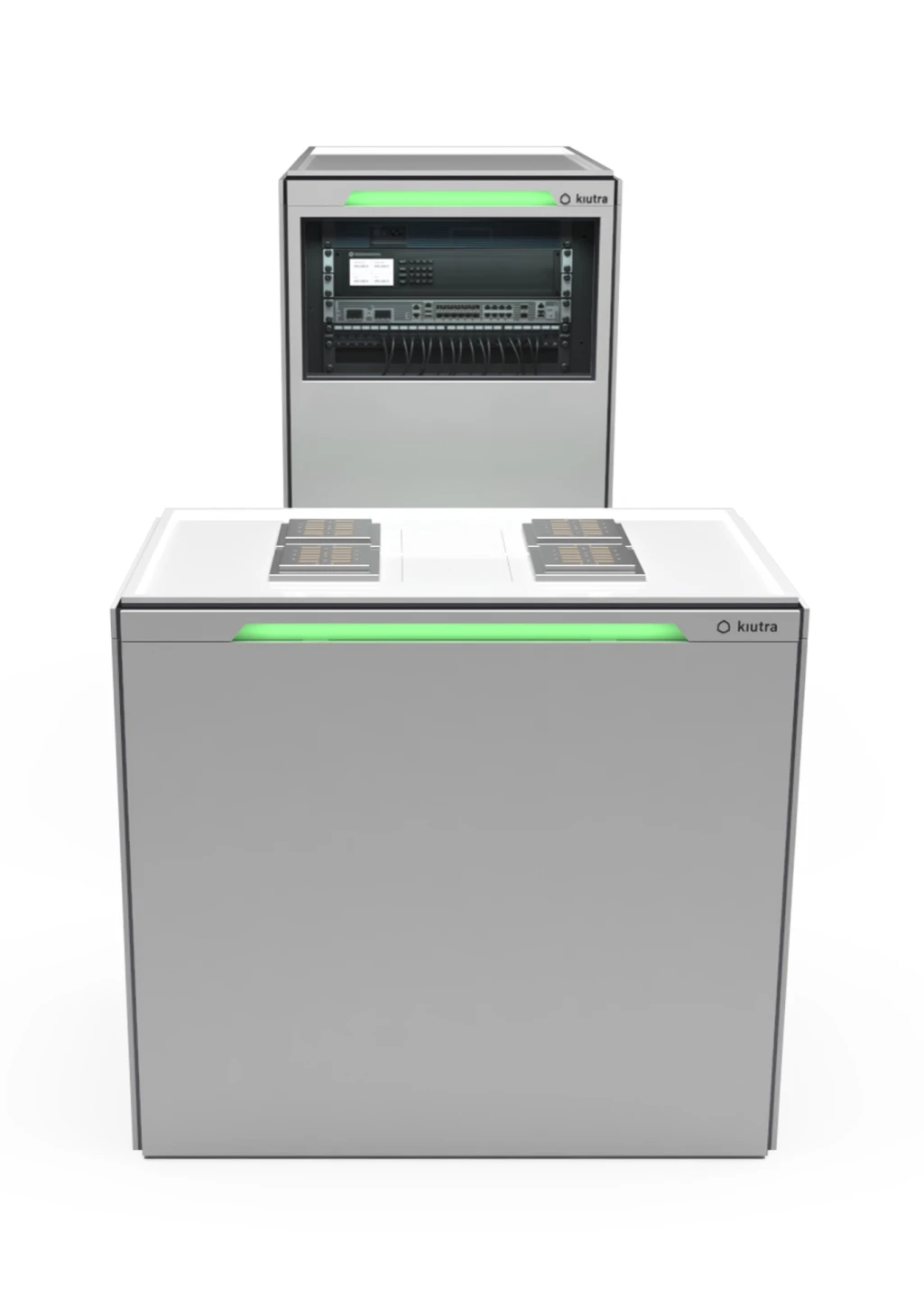
Spin qubits
One cooling module and one payload module
| Temperature stage | Operating temperature | Cooling power |
|---|---|---|
| 1st CCR | 50 K | 5 W (+35 W **) |
| 2nd CCR | 4 K | 0.4 W (+1 W **) |
| Payload stage | 300 mK* | 10 mW |
* Base temperature < 100 mK · **with additional cryocooler in the payload module
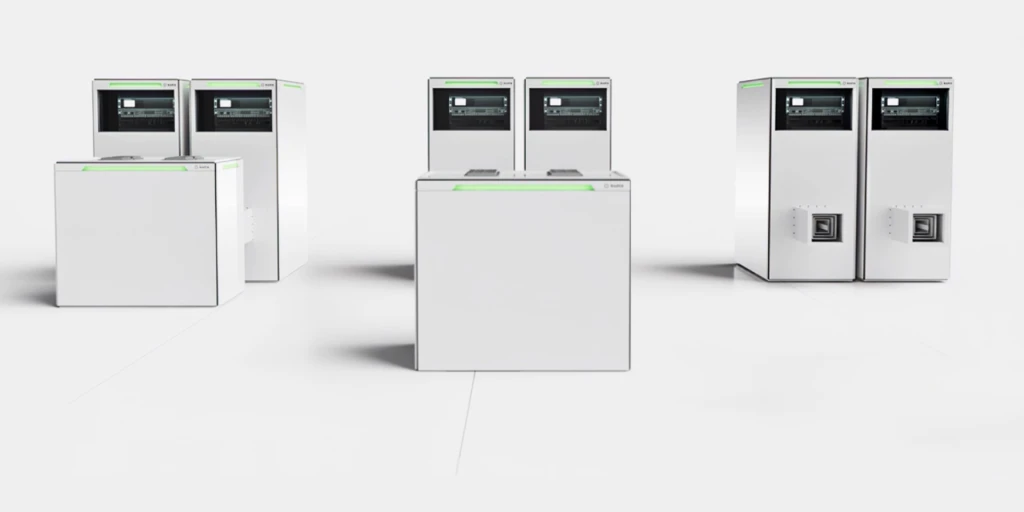
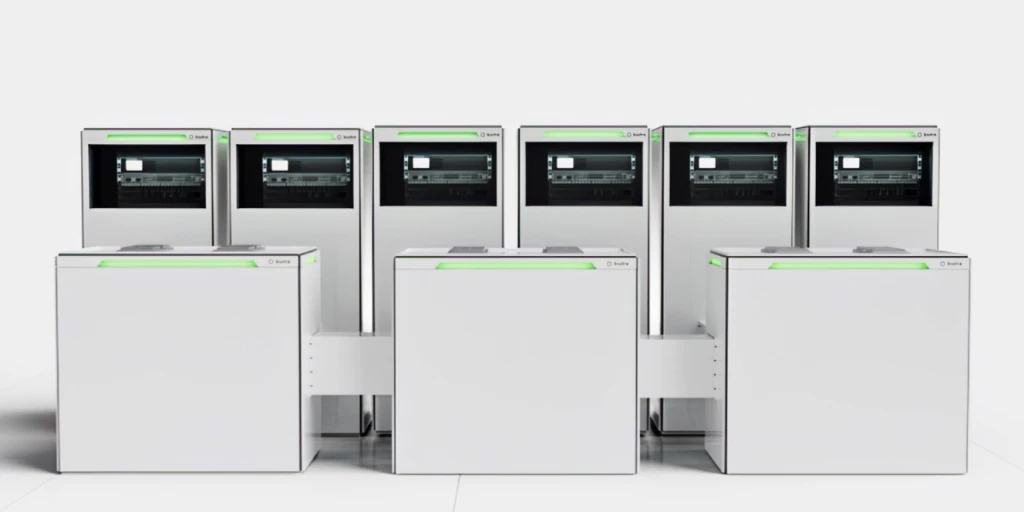
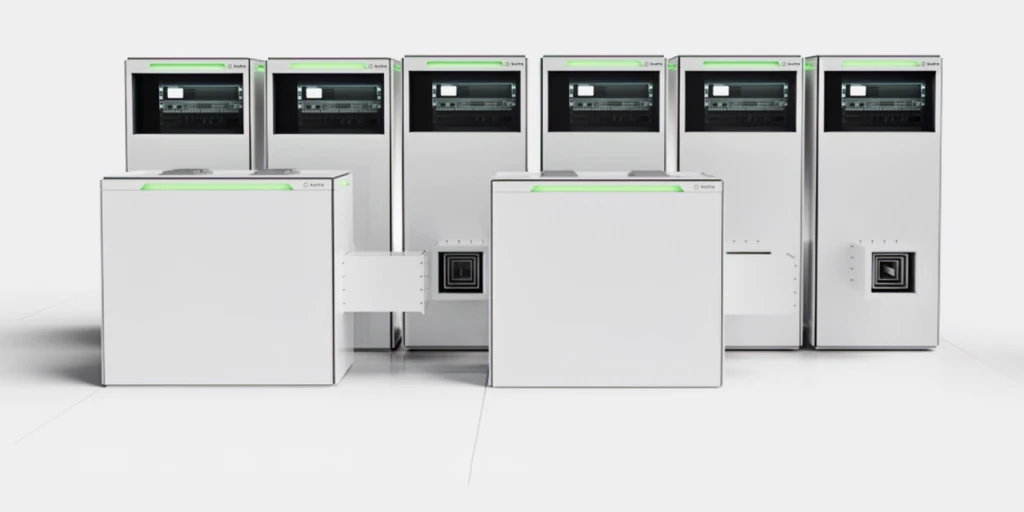
Enabling industry-level quantum systems
Scalable cooling infrastructure
Increase cooling power on demand by adding cooling modules, without making existing systems obsolete.
Expandable system architecture
Grow system capacity to support larger and more powerful quantum processors.
Helium-3 independent operation
Future-proof your quantum infrastructure with a secure and scalable cryogenic supply chain.
Industry-level deployment
Decouple hardware integration from the cooling infrastructure to enable scalable, industry-level deployment.
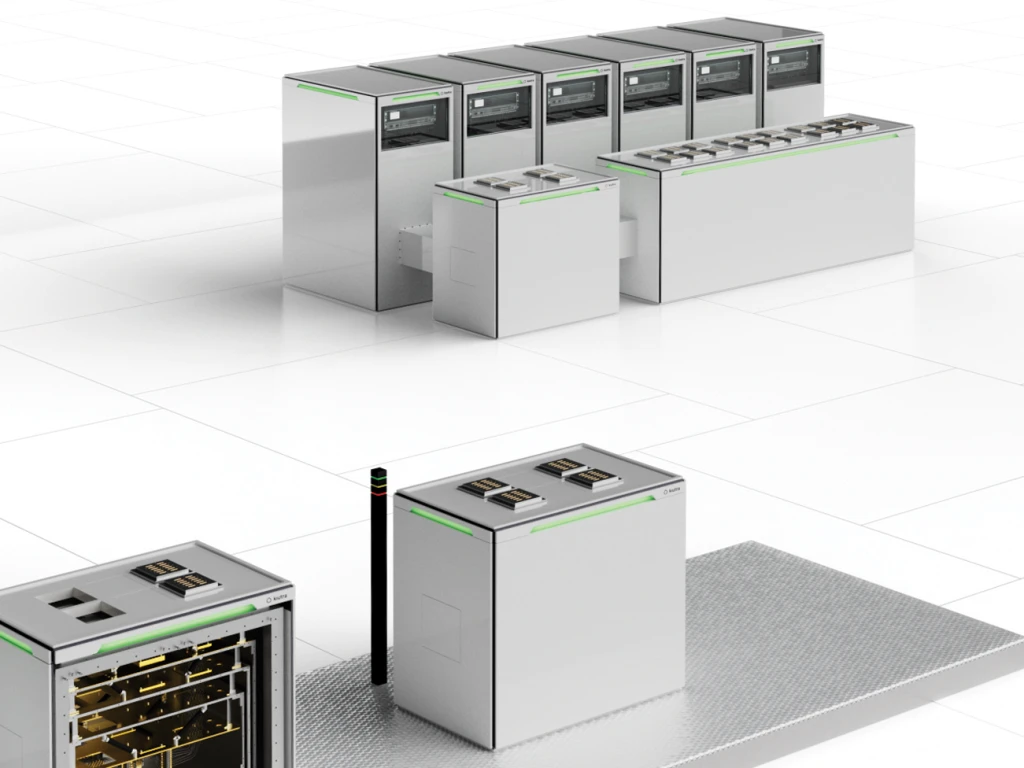
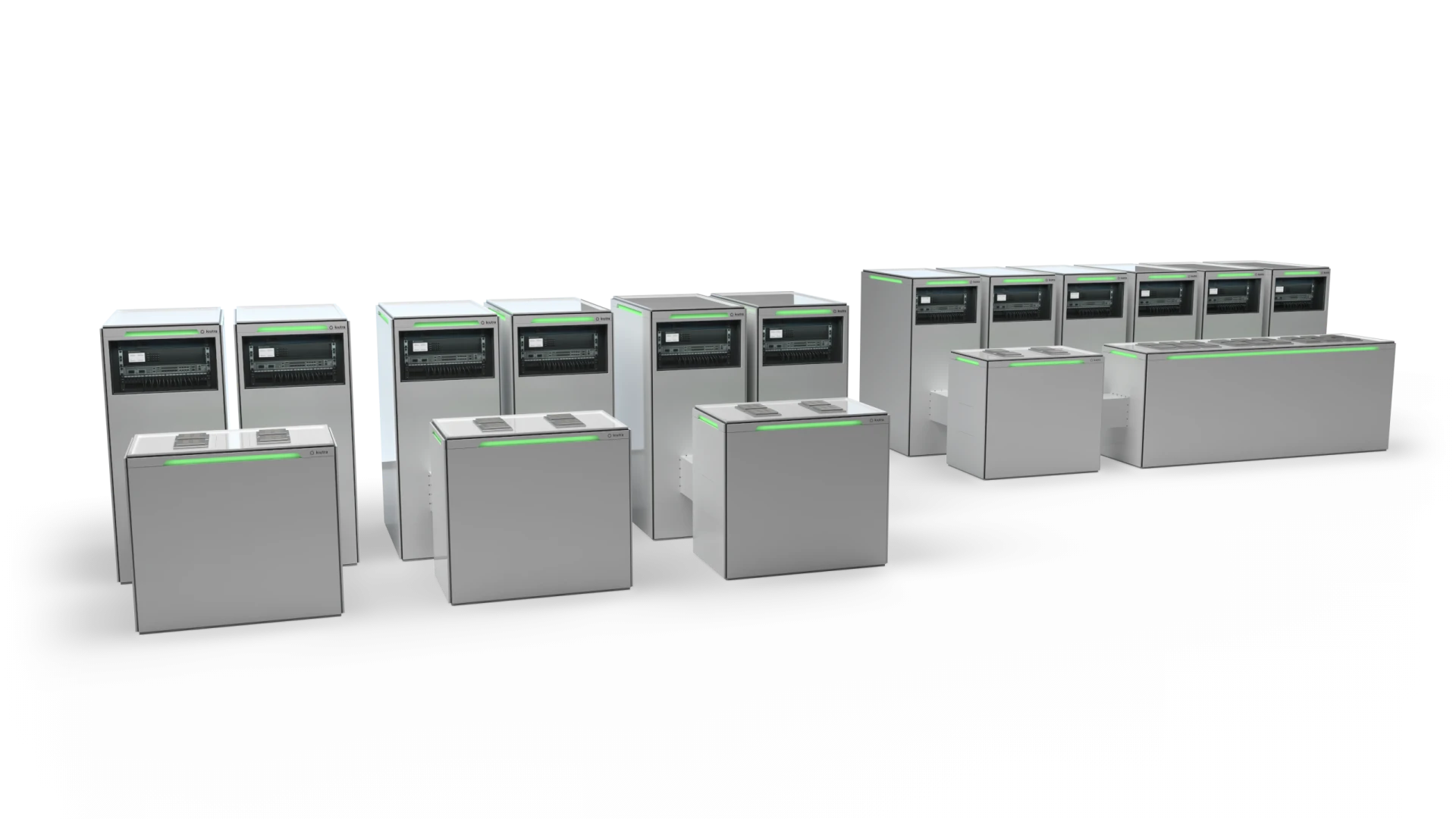
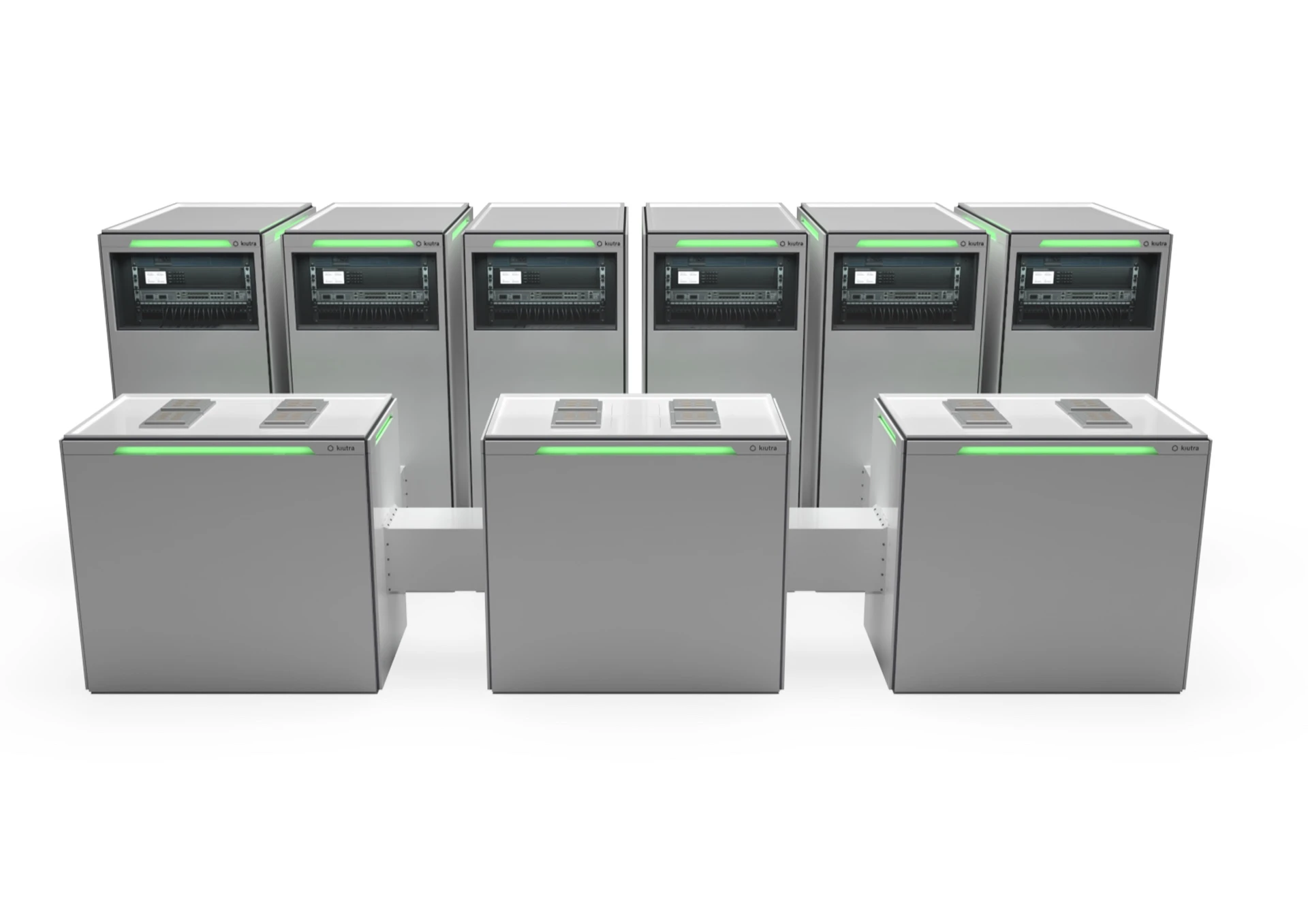
Left
3 × base configuration
Three X-Type base configurations in the superconducting setup, each comprising two cooling and one payload module, delivering 20 µW at 20 mK for up to 768 RF lines.
- 3 × 2 cooling modules
- 20 µW at 20 mK each
- 3 × 1 payload module
- 768 RF lines each
Right
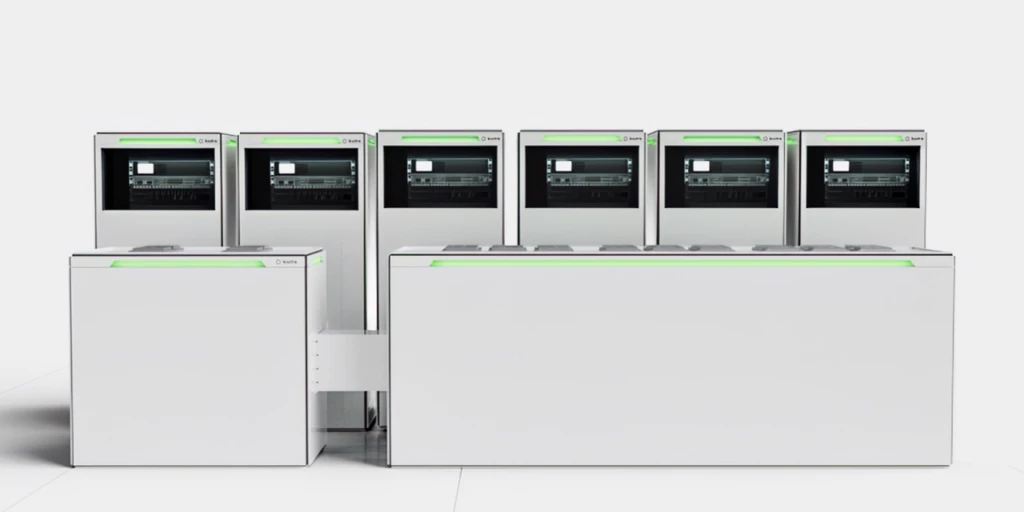
Recombined system
One X-Type configuration recombining the 6 cooling modules to now deliver 100 µW of cooling power to a larger next-generation processor across two interconnected payload modules.
- 6 cooling modules
- 100 µW at 20 mK combined
- 2 payload modules
- 768 + 3,072 RF lines
- Cold interconnect
- joins the two payload modules
Example configuration
| Temperature stage | Operating temperature | Cooling power |
|---|---|---|
| 1st CCR | 50 K | 60 W |
| 2nd CCR | 4 K | 5 W |
| 1st intermediate T | 0.1 K to 1.0 K | 25 mW at 0.5 K / 70 mW at 1.0 K |
| 2nd intermediate T | 0.1 K to 1.0 K | 1 mW at 0.1 K / 10 mW at 0.3 K |
| Payload stage | 20 mK | 80 µW |
Power consumption – total system
| 4 K pre-cooling | 9 × 11.6 kW |
|---|---|
| Electronics & control | < 4 kW |
| Total | ~100 kW |
Size
| Cold plate (example configuration) | 200 cm × 60 cm |
|---|---|
| System footprint (W × D × H) | 3.5 m × 4 m × 2 m |
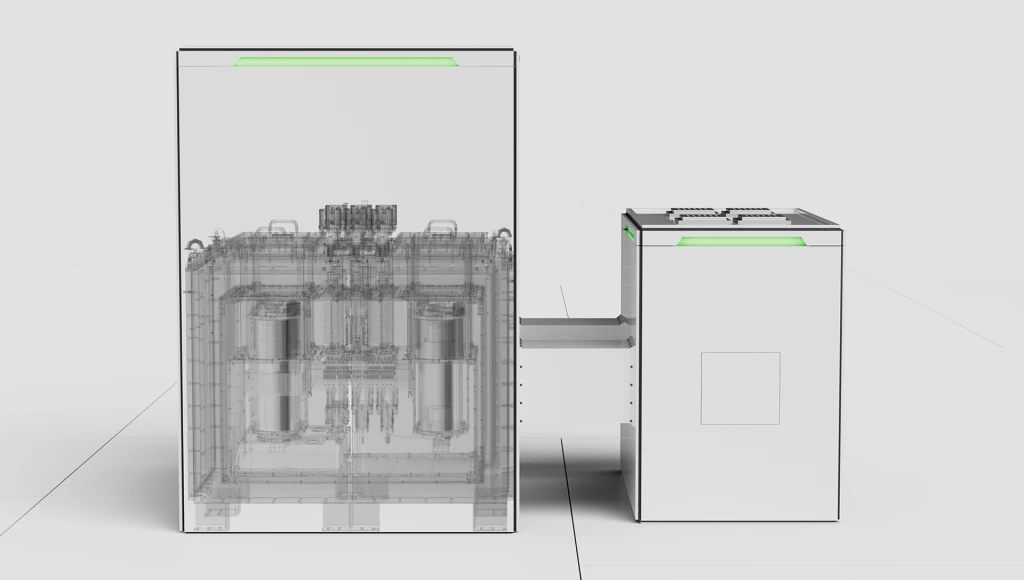
This is one example. The X-Type can be configured in many ways to best match the requirements of different payloads.
Cryogen-free cooling at millikelvin temperatures
Roadmap to scalable quantum cooling infrastructure
Past
Demonstrating continuous magnetic cooling for quantum systems
In collaboration with Delft Circuits, kiutra developed a compact demonstrator showcasing continuous adiabatic demagnetization refrigeration (cADR) for superconducting quantum hardware. The rack-mounted system integrates magnetic cooling with thermally optimized RF wiring, demonstrating stable millikelvin operation and continuous cooling power in a cryogen-free platform. These results show that magnetic cooling can support application-ready quantum systems without reliance on helium-3. Full technical details of the system design and experimental performance are presented in:
Schüßler et al., Rev. Sci. Instrum. 97, 025214 (2026)
Present
Advancing modular magnetic cooling
Building on the demonstrator results, kiutra is advancing magnetic cooling toward higher power and modular deployment. Within the LEMON program, dedicated ultra-low-temperature test infrastructure has been commissioned and key technologies for scalable systems are being developed and validated. This work focuses on translating proven magnetic cooling concepts into components and architectures suitable for larger quantum platforms.
More about LEMONFuture
Scalable cryogenic infrastructure for quantum systems
The X-Type builds on these validated foundations to deliver a modular cooling architecture designed for significantly higher cooling power and lower base temperatures. By combining helium-3-free magnetic cooling with modular system expansion, the X-Type establishes a scalable cryogenic infrastructure for the next generation of quantum technologies.
How the X-Type beta program works
Roadmap discussions
Work directly with our engineering team to integrate your setup into our payload module and align on the long-term vision of scalable quantum computing.
Define specifications
Provide input on technical requirements to ensure configurations are optimized for your hardware, workflows, and performance targets.
Priority deployment
Get priority access and preferential terms as systems move into production for faster deployment and smoother scale-up.
Get in touch
Build with us as an X-Type beta program partner
Gain early access to the first X-Type modules and shape the future of sustainable cryogenics together with us.
-
Customer support
-
Interested in joining kiutra?
-
Give us a call
-
Visit us
kiutra GmbH
Flößergasse 2
81369 Munich
Germany